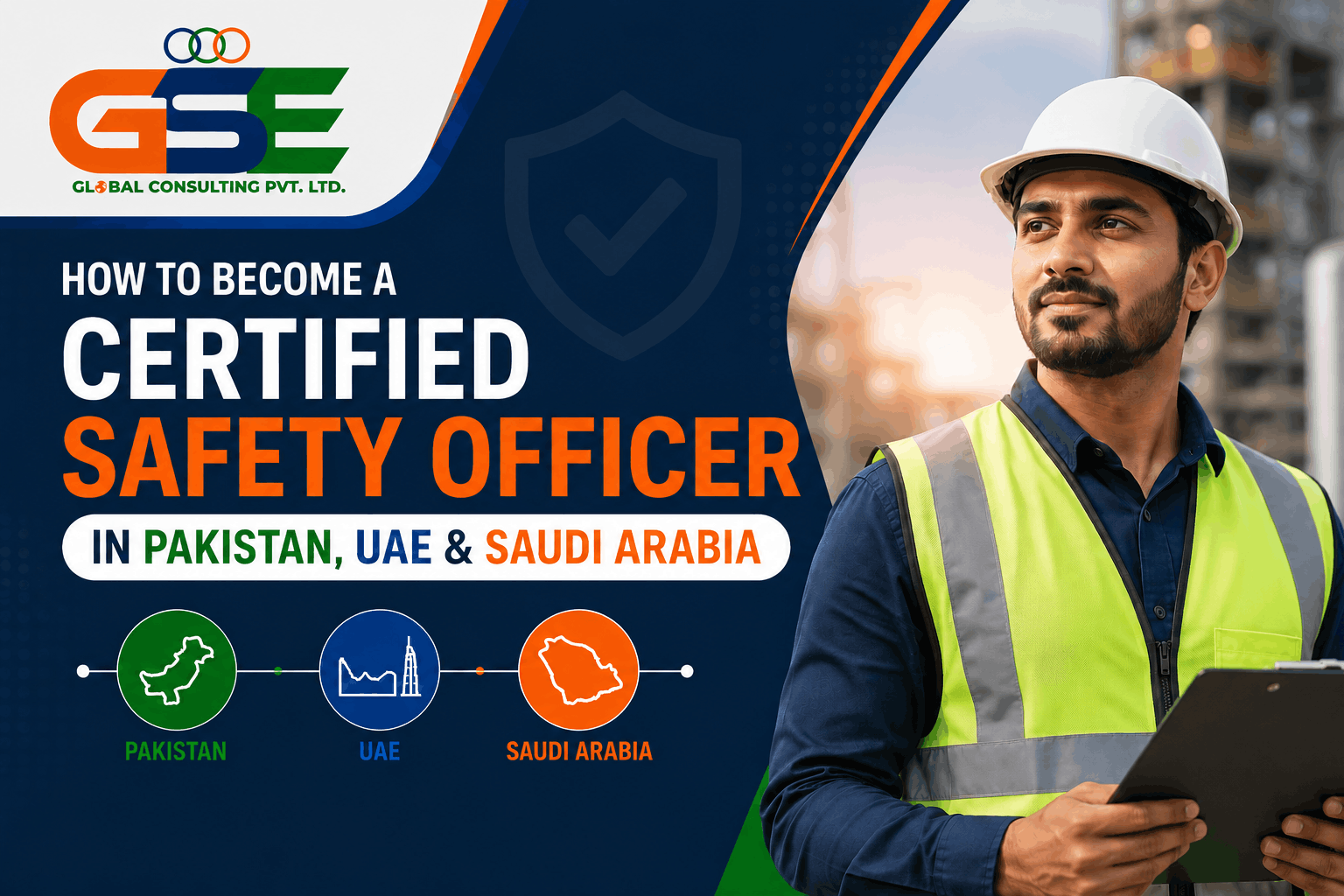
How to Become a Certified Safety Officer in Pakistan, UAE & Saudi Arabia
Workplace safety is no longer treated as a compliance requirement only—it has become a business priority across construction, oil & gas, manufacturing, infrastructure, healthcare, and industrial sectors.
As companies continue strengthening Health, Safety, and Environment (HSE) systems, the demand for qualified Safety Officers has increased significantly in Pakistan and Gulf countries.
If you want to build a professional career in safety management or move into international opportunities in UAE and Saudi Arabia, becoming a certified Safety Officer can create long-term career growth.
This guide explains the qualifications, certifications, career path, salary expectations, and how Global Consulting for Safety and Environment (GSE) helps professionals prepare for this journey.
Who Is a Certified Safety Officer?
A Safety Officer is responsible for creating safe working environments by identifying hazards, implementing safety procedures, reducing workplace risks, conducting inspections, and ensuring compliance with local and international standards.
Typical responsibilities include:
- Conducting workplace risk assessments
- Managing incident reporting and investigations
- Implementing HSE procedures
- Delivering safety training sessions
- Monitoring PPE compliance
- Performing site inspections and audits
- Supporting ISO and regulatory compliance
Industries hiring Safety Officers include:
- Construction
- Oil & Gas
- Manufacturing
- Warehousing
- Engineering Projects
- Healthcare Facilities
- Logistics
Infrastructure Development
Step 1: Meet the Basic Qualification Requirements
The first requirement depends on the country and employer.
Pakistan
Most companies accept:
- Intermediate (FA/FSc/ICS)
- DAE Diploma
- Bachelor’s degree (preferred)
- Engineering background (advantage)
UAE
Most employers prefer:
- Diploma or Bachelor’s degree
- International HSE certification
- Practical site experience
Saudi Arabia
Common requirements include:
- Technical diploma or degree
- Recognized safety certifications
- Site supervision experience
Academic qualification helps, but certifications often have a stronger impact during hiring.
Step 2: Choose the Right Safety Certification
This is where most candidates make mistakes.
Many people collect random certificates but still struggle to find jobs because employers look for recognized qualifications.
Entry-Level Certifications
OSHA (Occupational Safety Training)
Best for:
- Beginners
- Construction workers
- Site supervisors
Benefits:
- Basic workplace hazard understanding
- International recognition
- Strong foundation for HSE careers
IOSH Managing Safely
Best for:
- Supervisors
- Team leaders
- Managers
Benefits:
- Practical safety management
- Leadership-focused training
- Useful across industries
NEBOSH IGC (International General Certificate)
Best for:
- Candidates targeting UAE and Saudi Arabia
Benefits:
- Globally recognized
- High employer demand
- Strong career progression
NEBOSH is commonly considered one of the strongest certifications for Gulf opportunities.
ISO 45001 Lead Auditor
Best for:
- HSE professionals
- Consultants
- Internal auditors
Benefits:
- Occupational Health & Safety expertise
- Audit skills
- Consultancy opportunities
Step 3: Build Practical Site Experience
Certifications alone are rarely enough.
Employers often prioritize candidates who understand:
- Permit-to-work systems
- Toolbox talks
- Site inspections
- Incident reporting
- Safety observations
- Emergency response planning
Ways to gain experience:
- Internships
- Site assistant roles
- Safety trainee positions
- Volunteer industrial projects
Even 6–12 months of site exposure can improve employability.
Step 4: Develop Skills Employers Actually Want
Modern Safety Officers need more than technical knowledge.
Focus on:
Technical Skills
- Hazard identification
- Root cause analysis
- Risk assessment
- Safety documentation
- Emergency preparedness
Professional Skills
- Communication
- Report writing
- Leadership
- Team coordination
- Presentation skills
Digital Skills
- Excel
- Audit tools
- Incident software
- Reporting dashboards
Certification Path for Pakistan → UAE → Saudi Arabia
Level 1 – Foundation
Safety Course + OSHA
↓
Level 2 – Career Development
IOSH + Site Experience
↓
Level 3 – International Growth
NEBOSH IGC
↓
Level 4 – Specialist Level
ISO 45001 Lead Auditor
↓
Level 5 – Senior Roles
HSE Manager / Consultant
Salary Expectations (Approximate)
Pakistan
- Fresh Safety Officer: PKR 50,000–90,000
- Experienced: PKR 120,000–250,000+
UAE
- Entry Level: AED 3,500–6,000
- Experienced: AED 8,000–15,000+
Saudi Arabia
- Entry Level: SAR 4,000–7,000
- Experienced: SAR 8,000–18,000+
Actual salaries depend on industry, certification level, and experience.
Why ISO Knowledge Gives Safety Professionals an Advantage
Many companies now prefer Safety Officers who understand management systems.
Learning standards such as:
- ISO 45001 – Occupational Health & Safety
- ISO 9001 – Quality Management
- ISO 14001 – Environmental Management
can increase career opportunities.
Professionals with both safety certifications and ISO implementation knowledge often move faster into supervisory and consultancy positions.
How Global Consulting for Safety and Environment (GSE) Supports Safety Professionals
At Global Consulting for Safety and Environment (GSE), we help professionals and organizations build practical HSE capability through consultancy and professional development support.
Our focus areas include:
- Safety awareness and professional guidance
- ISO implementation support
- Occupational health & safety systems
- Risk assessment frameworks
- Internal audit support
- Certification readiness consultation
Whether your goal is employment in Pakistan or preparing for international opportunities in UAE and Saudi Arabia, building the right learning path early can make a measurable difference.
Common Mistakes to Avoid
Avoid these career mistakes:
❌ Collecting too many unrelated certificates
❌ Ignoring practical experience
❌ Skipping international standards
❌ Weak CV preparation
❌ Applying internationally without required credentials
Focus on quality training and practical competence.
Becoming a Certified Safety Officer is one of the most practical career paths for professionals interested in workplace safety, compliance, and international opportunities.
Start with foundational training, gain practical exposure, move toward internationally recognized certifications, and continuously improve your technical and communication skills.
A structured approach creates stronger opportunities—not only in Pakistan but also across UAE and Saudi Arabia.
(FAQs)
Which certification is best for becoming a Safety Officer?
OSHA and NEBOSH are commonly selected depending on career goals and target country.
1 Can I become a Safety Officer after Intermediate?
Yes. Many entry-level positions accept Intermediate qualification combined with safety certifications.
2 How long does it take to become a Safety Officer?
Most candidates can build initial qualifications within 3–12 months depending on training and experience.
3 Does ISO 45001 help Safety Officers?
Yes. It strengthens understanding of occupational health and safety management systems.
4 Can fresh graduates enter the safety field?
Yes. Entry-level certifications and internship experience can help new candidates start their careers.
Does GSE help with both certification guidance and ISO consultancy?
Yes. We support individuals figuring out the right certification path for their target market, and broader HSE consultancy needs across Pakistan, the UAE, and Saudi Arabia.