PMP exam Changes – Updated Pattern, Exam Format & Tips 2026
If you are planning to prepare for PMP this year or considering certification in the near future, understanding these changes early can improve preparation quality and help you focus on the right study areas.
The updated PMP examination structure reflects how projects are managed today—not only through processes and schedules but also through business value, adaptability, leadership, and strategic decision-making.
In this article, we analyze the major PMP exam changes in 2026, explain their impact, and provide preparation recommendations.
PMP Exam 2026 Overview
Before diving into the changes, here is a quick overview of what candidates should expect.
PMP Exam Element |
Updated Focus in 2026 |
Exam Style |
Scenario-based questions |
Delivery Approach |
Predictive + Agile + Hybrid |
Business Alignment |
Increased importance |
Technology Awareness |
AI and digital tools |
Candidate Skills |
Leadership and decision-making |
Why Is the PMP Exam Changing?
The Project Management Institute (PMI) periodically updates the PMP exam to align certification standards with current industry practices.
Organizations now expect project managers to:
- Connect projects with business objectives
- Lead diverse and distributed teams
- Deliver measurable business outcomes
- Apply agile and hybrid methodologies
- Make strategic decisions under changing conditions
The PMP Exam 2026 reflects these expectations.
1. Business Environment Is No Longer a Small Topic
One of the most noticeable changes in PMP 2026 is the increased emphasis on Business Environment.
Previously, preparation focused heavily on execution and delivery processes. The updated structure gives greater importance to strategic alignment and organizational impact.
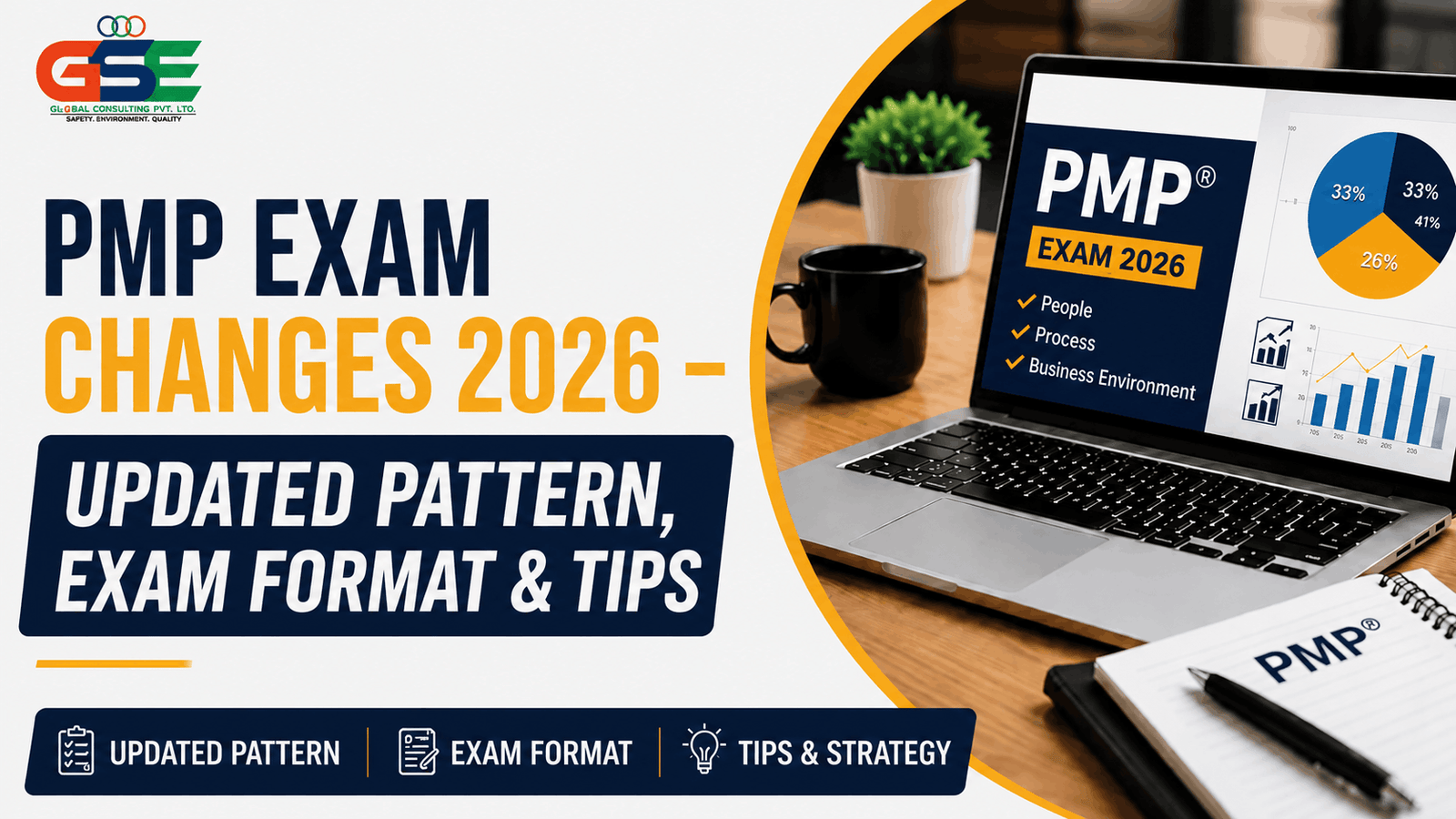
PMP 2026 Domain Weight Distribution
Domain |
Weight |
People |
33% |
Process |
41% |
Business Environment |
26% |
This means approximately one out of every four questions may relate directly to business outcomes and organizational priorities.
What Candidates Should Study
Study Area |
Importance |
Organizational Governance |
High |
Compliance Requirements |
High |
Business Strategy Alignment |
High |
Risk & Change Management |
Medium |
Benefits Realization |
High |
Value Delivery |
High |
Candidates who understand business impact—not just project execution—will have an advantage.
2. Greater Focus on Agile and Hybrid Project Delivery
Project management is no longer separated into traditional and agile approaches.
The PMP Exam 2026 continues emphasizing hybrid delivery models, where organizations combine predictive and adaptive methods.
Candidates should expect scenario-based questions involving:
- Agile frameworks
- Hybrid execution
- Team collaboration
- Delivery adaptation
- Decision-making under uncertainty
Methodology Distribution Analysis
Delivery Method |
Estimated Coverage |
Predictive |
40% |
Agile + Hybrid |
60% |
What This Means for Candidates
Success will depend less on memorization and more on understanding how methodologies work together in practical situations.
3. AI and Emerging Technologies Are Entering the Exam
Artificial Intelligence is becoming increasingly relevant in project environments.
The PMP Exam 2026 introduces stronger emphasis on technology-supported decision-making.
Candidates are not expected to become technical specialists, but they should understand how technology supports project outcomes.
Technology Areas to Understand
Topic |
Expected Understanding |
|
Automation |
Basic |
|
Ethical AI Usage |
Moderate |
|
AI-Based Planning |
Moderate |
|
Risk Analysis Tools |
Moderate |
|
Decision Support Systems |
Moderate |
|
Digital Collaboration |
High |
Example Scenarios
Candidates may encounter situations involving:
- Reviewing automated reports
- Managing AI-supported schedules
- Evaluating recommendations
- Leading digitally enabled teams
The objective is practical application rather than technical expertise.
4. Questions Will Become More Scenario Driven
Traditional PMP preparation often relied on formulas and definitions.
The updated exam continues moving toward real-world project scenarios.
Questions are expected to evaluate:
- Judgment
- Stakeholder engagement
- Communication
- Prioritization
Strategic thinking
Traditional vs PMP 2026 Question Style
Traditional Questions |
PMP 2026 Questions |
Definition-based |
Scenario-based |
Memorization focused |
Decision focused |
Direct answers |
Context-driven |
Formula heavy |
Leadership oriented |
Example:
Instead of:
“What is change control?”
Candidates may see:
“A sponsor changes business priorities during execution. What should the project manager do first?”
Skills That Matter More in 2026
- Reading scenarios efficiently
- Identifying root causes
- Selecting best actions
- Managing competing priorities
- Applying concepts practically
Practice exams become increasingly important.
5. Preparation Strategy Must Change
Many candidates still prepare using outdated methods.
The updated structure requires a more balanced and practical approach.
Recommended PMP Preparation Framework
Preparation Activity |
Priority |
Study Exam Content Outline |
Very High |
Practice Mock Exams |
Very High |
Review Case Studies |
High |
Group Discussions |
Medium |
Practical Application |
High |
Study the Exam Content Outline First
Avoid relying entirely on random videos or outdated notes.
Focus on:
- Exam domains
- Task distribution
- Question expectations
Practice Situational Questions
Prioritize:
- Leadership decisions
- Governance scenarios
- Agile adaptation
- Business impact analysis
Develop Business Thinking
Ask yourself:
- Why is this project being executed?
- What outcome matters?
- What value does delivery create?
Use Multiple Learning Methods
Combine:
- Study guides
- Mock exams
- Case studies
- Group discussions
- Practical examples
Consistency produces better results than last-minute preparation.
Should You Take PMP Before or After the Change?
Your decision depends on preparation status.
Decision Comparison Table
Situation |
Recommendation |
Already preparing |
Continue current timeline |
Exam scheduled soon |
Take current version |
Starting preparation now |
Prepare for updated version |
Long-term certification plan |
Follow PMP 2026 structure |
There is no universally better version.
The right choice depends on readiness and preparation goals.
Key Takeaways: PMP Exam 2026 Changes
Major Change |
Candidate Action |
Business Environment Growth |
Study business alignment |
Agile & Hybrid Expansion |
Practice adaptive delivery |
AI Integration |
Understand digital decision-making |
Scenario-Based Questions |
Improve analytical thinking |
New Preparation Approach |
Use practical learning |
The PMP Exam 2026 update represents more than a revised exam pattern.
It reflects how project professionals are expected to create value in modern organizations.
Project managers are moving beyond schedules and documentation toward leadership, business contribution, and strategic execution.
Candidates who adapt early will gain a competitive advantage.
Focus less on memorization.
Focus more on:
- Leadership
- Business outcomes
- Adaptive delivery
- Real-world application
That is where project management is heading.
If you are planning to pursue PMP certification, now is the right time to align your preparation strategy with future project leadership expectations.
Need PMP project management guidance or training ?
Explore GlobalConsultin-int.com professional training pathways and build a preparation plan aligned with the latest PMP exam expectations.
(FAQs)
1. Is the PMP Exam changing in 2026?
Yes. The PMP Exam 2026 introduces stronger emphasis on business environment, agile delivery, scenario-based questions, and technology awareness.
2. Will PMP 2026 include AI-related questions?
Candidates may encounter questions involving AI-supported decision-making and digital project environments, but technical programming knowledge is not required.
3.What is the PMP exam pattern?
The PMP exam typically includes questions covering three main domains:
- People
- Process
- Business Environment
The exam evaluates project management knowledge, leadership skills, and practical decision-making abilities.
4.Is PMP difficult?
PMP is considered a moderately challenging certification because it tests both theoretical understanding and practical project management scenarios. A structured study plan, mock exams, and consistent preparation significantly improve success rates.
5.How many questions are in the PMP exam?
The PMP exam currently consists of 180 questions completed within the official exam duration set by PMI. The questions include multiple formats designed to evaluate real-world project management skills.
6.How long should I prepare for PMP?
Preparation time varies by experience level, but many candidates prepare over several weeks to a few months using study plans, practice tests, and exam simulations.
7.Is PMP certification worth it in Saudi Arabia?
PMP certification is widely recognized in Saudi Arabia and can support career growth in project management, construction, engineering, IT, and corporate sectors.