The oil and gas industry is one of the most important sectors in Qatar. It provides energy, supports economic growth, and creates thousands of job opportunities. However, working in this industry also comes with serious risks. Employees may work around heavy machinery, high-pressure equipment, flammable materials, toxic gases, and complex industrial systems. A small mistake can lead to serious injuries, equipment damage, or environmental harm.
This is why HSE training is essential for everyone working in the oil and gas sector. It helps workers understand workplace hazards, follow safe working procedures, and respond correctly during emergencies. Whether someone works on an offshore platform, drilling site, refinery, or gas processing facility, proper safety knowledge is important for daily operations.
For workers and employers in Qatar, choosing the right safety training courses can help improve workplace safety, meet project requirements, and build a stronger safety culture.
Why HSE Training Matters in Qatar’s Oil and Gas Industry
Oil and gas operations involve different types of workplace hazards. Workers may face fire and explosion risks, chemical exposure, falls from height, electrical hazards, confined spaces, and dangerous lifting activities. Offshore employees may also work in challenging weather conditions and isolated locations.
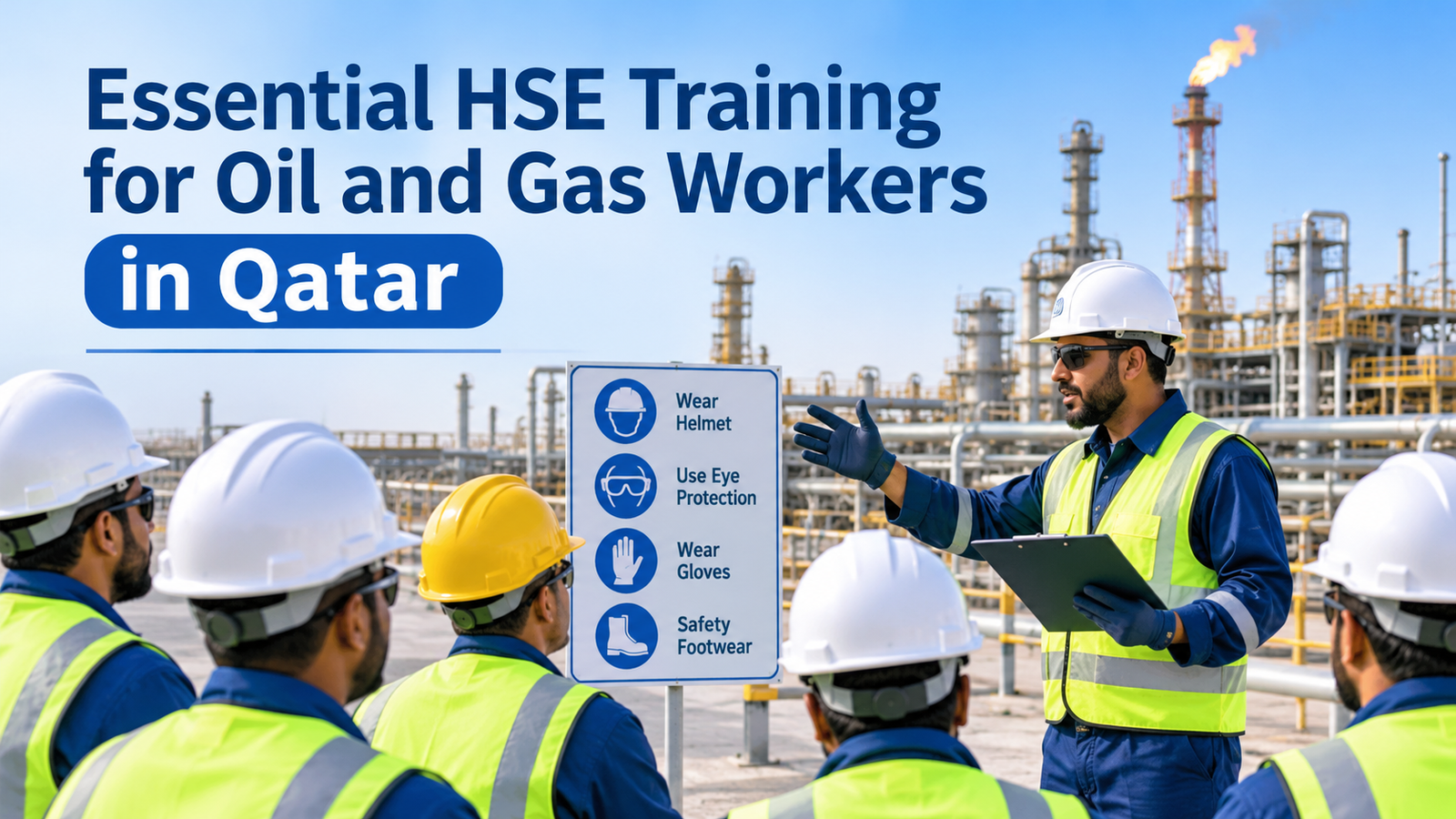
Proper HSE training helps employees recognise these risks before starting a task. It teaches them how to use personal protective equipment (PPE), follow safety instructions, report unsafe conditions, and protect their colleagues.
Training also supports companies in meeting their health, safety, and environmental responsibilities. Qatar Energy’s contractor HSE standards highlight the importance of worker induction, relevant training, and competency development for employees and subcontractors working on its projects. The exact requirements depend on the contract, job role, and work location.
1. H2S Awareness and Breathing Apparatus Training
Hydrogen sulphide (H2S) is a highly toxic gas that can be present in some oil and gas operations. It is especially dangerous because exposure to high concentrations can quickly affect a person’s ability to breathe and may cause death. Workers should never depend on smell to identify this gas because it can affect the sense of smell.
H2S awareness training teaches workers how to recognise possible exposure risks, understand gas detection alarms, follow site warning systems, and move to a safe area during an emergency. Workers who may need to enter hazardous areas also require suitable practical training in the use of breathing apparatus, according to their responsibilities and site procedures.
This training is particularly important for drilling crews, production teams, maintenance workers, and other employees who may work in areas where H2S is present.
2. Permit to Work (PTW) Training
Many activities in oil and gas facilities cannot be performed without proper approval. A Permit to Work system helps companies control high-risk jobs by checking the hazards, safety precautions, and responsibilities before work begins.
Permit to Work training explains how the system operates and why workers must follow its conditions. Employees learn about different permits, including hot work, cold work, electrical work, confined space entry, and excavation permits.
Workers also learn how to understand permit instructions, confirm that required precautions are in place, and stop work when conditions change. Supervisors and permit holders need a clear understanding of their responsibilities because poor permit control can lead to serious incidents.
3. Fire Safety and Basic Fire Fighting Training
Fire is a major concern in oil and gas facilities because many operations involve flammable gases, liquids, and materials. A fire can spread quickly and create an explosion risk if it is not controlled.
Fire safety training teaches employees how fires start, how to prevent common ignition sources, and how to respond when an alarm is raised. Workers learn about different types of fire extinguishers, emergency exits, evacuation procedures, and assembly points.
Basic practical training can also help employees understand how to use suitable fire extinguishers safely. However, workers should only attempt to control a small fire when they are trained, the correct equipment is available, and a safe escape route remains open. Their first priority should always be protecting themselves and following the site’s emergency plan.
4. Confined Space Entry Training
Storage tanks, pipelines, vessels, and certain industrial chambers may be classified as confined spaces. These areas can have limited entry and exit points and may contain dangerous atmospheres.
Confined space entry training prepares workers to understand the risks before entering such locations. It covers atmospheric testing, oxygen levels, toxic gases, ventilation, entry permits, communication methods, and emergency arrangements.
The training also explains the role of standby personnel and rescue teams. Workers must understand that entering a confined space without proper approval and safety controls can be life-threatening. Rescue attempts should only be carried out by trained and properly equipped personnel.
5. Working at Height Training
Oil and gas workers often perform tasks on platforms, scaffolding, ladders, elevated structures, and other raised areas. A fall from height can cause serious injuries or death.
Working at height training helps employees identify fall hazards and understand how to prevent them. It covers safe ladder use, scaffold safety, fall protection equipment, safety harnesses, anchor points, and inspection of protective equipment.
Workers also learn why fall prevention should be considered before starting a job. Where possible, companies should use suitable platforms, barriers, or other protective systems instead of relying only on personal fall protection equipment.
6. First Aid and Emergency Response Training
Medical emergencies can happen at any workplace. In oil and gas facilities, injuries may result from burns, falls, equipment accidents, chemical exposure, or other incidents.
First aid training gives workers the basic knowledge needed to respond while professional medical assistance is arranged. Depending on the course, employees may learn how to assess an injured person, manage bleeding, respond to burns, perform CPR, and use an automated external defibrillator (AED).
Emergency response training also prepares workers for fire alarms, gas leaks, equipment failures, and evacuation situations. Regular drills help employees understand their roles and react calmly when an emergency occurs.
7. Risk Assessment and Job Hazard Analysis Training
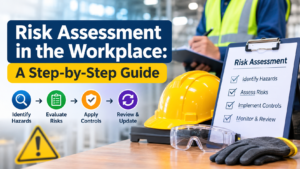
Before starting a task, workers should understand what can go wrong and how those risks can be controlled. Risk assessment and Job Hazard Analysis (JHA) training help employees identify hazards linked to specific activities.
For example, a maintenance task may involve electrical energy, moving machinery, chemical exposure, or work at height. Workers learn to break a job into steps, identify possible hazards, assess the level of risk, and select suitable control measures.
This training encourages employees to think about safety before taking action. It also supports better communication between workers, supervisors, and HSE teams.
8. Lifting Operations and Manual Handling Training
Lifting operations are common in oil and gas projects. Cranes, forklifts, hoists, and other lifting equipment are used to move heavy materials and machinery. Poor planning or incorrect equipment use can cause dropped loads, equipment failure, and serious injuries.
Lifting and rigging training helps relevant workers understand safe lifting procedures, load limits, lifting accessories, communication signals, and the responsibilities of lifting teams. Personnel involved in rigging and slinging should receive training suitable for their assigned duties.
Manual handling training is also useful for workers who regularly lift, carry, push, or move materials. It explains safer handling techniques and ways to reduce the risk of back injuries and muscle strain.
9. Environmental Awareness and Chemical Safety Training
Oil and gas activities can affect the environment if waste, chemicals, fuel, or other harmful substances are not managed properly. Environmental awareness training helps employees understand how their daily actions can prevent pollution.
Workers learn about correct waste disposal, spill prevention, chemical storage, and reporting environmental incidents. Chemical safety training also explains how to read safety data sheets, recognise chemical hazards, select suitable PPE, and respond to accidental exposure.
These skills help companies protect employees, nearby communities, and the surrounding environment.
Professional HSE Courses for Oil and Gas Workers
In addition to job-specific training, some employees may benefit from internationally recognised HSE qualifications. These courses are useful for people who want to develop their safety knowledge or move into supervisory and HSE-related roles.
Common options include:
- NEBOSH International General Certificate (IGC): Develops knowledge of workplace health and safety management and risk control.
- IOSH Managing Safely: Helps managers and supervisors understand their health and safety responsibilities.
- ISO 45001 Lead Auditor Training: Teaches participants how to audit occupational health and safety management systems.
- Incident Investigation Training: Develops skills in identifying incident causes and recommending corrective actions.
- Fire Safety and First Aid Courses: Provide practical knowledge for workplace emergencies.
The most suitable qualification depends on the employee’s experience, job responsibilities, employer expectations, and project requirements. Workers should always check whether a particular course or training provider is accepted by their employer or the relevant project before enrolling.
How to Choose the Right HSE Training Programme
Not every employee needs the same training. A drilling worker may need H2S and emergency response training, while an electrical technician may require additional electrical safety knowledge. Similarly, an HSE officer may benefit from risk assessment, incident investigation, and auditing courses.
Before selecting a programme, consider the following points:
- Check the hazards and responsibilities linked to the job role.
- Review the employer’s and project’s HSE training requirements.
- Choose a recognised course that matches the required level of knowledge.
- Confirm that practical training is included where necessary.
- Check the trainer’s experience and the quality of course materials.
- Keep training certificates and records updated.
Employers should also review training needs regularly. New equipment, changed work procedures, and different project conditions may require additional or refresher training.
Build a Safer Oil and Gas Workforce with Global Consulting International
A safe workplace starts with trained and responsible employees. In Qatar’s oil and gas industry, the right HSE training helps workers understand risks, follow safe procedures, and respond effectively when unexpected situations occur. It also supports employers in improving safety performance and developing a stronger culture of responsibility.
Whether you are an oil and gas worker looking to improve your skills, a supervisor aiming to strengthen workplace safety, or an employer planning training for your team, choosing the right programme is an important step.
Take the next step towards a safer and more successful career. Contact Global Consulting International today to explore professional HSE courses and training opportunities designed to support your learning and workplace safety goals.