Workplace safety should be a top priority for every business. Whether you manage an office, factory, construction site, warehouse, or training centre, employees may face different hazards during their daily activities. These hazards can cause injuries, illnesses, property damage, and financial losses if they are not managed properly.
Risk assessment is an important part of workplace health and safety management. It helps businesses identify potential dangers, understand who could be harmed, and take suitable steps to prevent accidents. A proper workplace risk assessment also helps employers build a safer working environment, improve employee confidence, and meet relevant health and safety requirements.
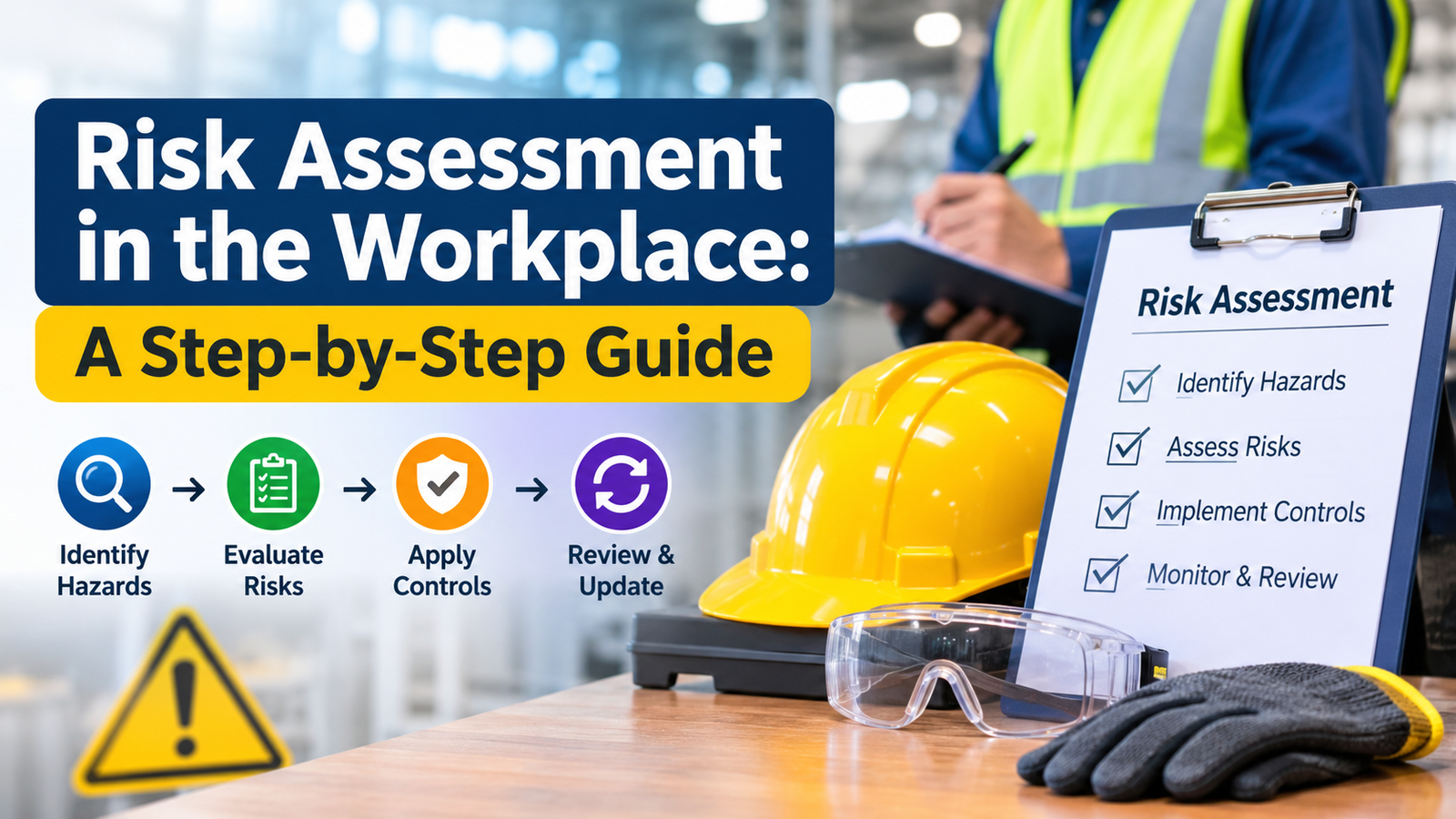
In this guide, we will explain the risk assessment process step by step and discuss how businesses can identify hazards, evaluate risks, and introduce effective control measures.
What Is Risk Assessment in the Workplace?
Risk assessment is the process of identifying anything that could cause harm in a workplace and deciding how to control it. It involves looking at work activities, equipment, materials, and working conditions to find possible dangers before an accident happens.
A hazard is anything that has the potential to cause harm. For example, a wet floor, exposed electrical wire, moving machinery, or harmful chemical can be a workplace hazard. Risk refers to the chance of someone being harmed by that hazard and how serious the harm could be.
For example, a wet floor in a busy corridor creates a risk of slipping and falling. Placing warning signs, cleaning the floor quickly, and improving drainage can help control this risk.
Risk assessment is not only useful for large industries. Offices, schools, hospitals, warehouses, construction companies, and small businesses can all benefit from it.
Why Is Workplace Risk Assessment Important?
A workplace risk assessment helps employers understand safety problems and take action before they lead to serious incidents. Without proper assessment, businesses may overlook hazards that can affect employees, contractors, visitors, and customers.
One major benefit is the prevention of workplace injuries and illnesses. Identifying risks early allows businesses to introduce suitable safety measures and reduce the chances of accidents. It can also reduce employee absence, equipment damage, compensation costs, and work interruptions.
Risk assessment also improves safety awareness. When employees understand workplace hazards and know how to protect themselves, they are more likely to follow safe working practices. It supports better planning, stronger safety procedures, and a positive workplace culture.
For businesses operating in Pakistan and Gulf countries, understanding applicable occupational health and safety laws and industry requirements is also important. A documented and regularly updated assessment can support a company’s wider health and safety management system.
Step-by-Step Risk Assessment Process
A risk assessment does not need to be complicated. Businesses can follow a simple and organised approach to identify hazards, evaluate risks, and decide what actions are needed.
Step 1: Identify Workplace Hazards
The first step is hazard identification. It means finding anything that could cause injury, illness, or damage to people or property.
Start by inspecting the workplace and observing how employees perform their daily tasks. Check machinery, electrical systems, work areas, storage spaces, chemicals, tools, and emergency exits. Also review accident reports, previous inspection records, and employee complaints because they may highlight hidden or repeated problems.
Common workplace hazards include:
- Physical hazards such as noise, heat, vibration, and moving machinery.
- Chemical hazards such as cleaning products, gases, fumes, and harmful substances.
- Biological hazards such as bacteria, viruses, and contaminated materials.
- Electrical hazards such as damaged wires and overloaded sockets.
- Ergonomic hazards such as poor seating, repetitive tasks, and heavy lifting.
- Fire hazards such as faulty equipment, flammable materials, and blocked exits.
- Psychological hazards such as excessive workload, workplace bullying, and work-related stress.
Do not focus only on normal working activities. Cleaning, maintenance, equipment repairs, and emergency situations can also create risks.
Step 2: Identify Who Might Be Harmed and How
After identifying the hazards, decide who could be affected and how they might be harmed.
This step should include everyone who enters or works at the site. Consider full-time and part-time employees, contractors, temporary workers, visitors, delivery staff, and members of the public where relevant.
Some workers may face additional risks because of their experience, training, age, disability, or specific work requirements. New employees may not understand certain safety procedures, while maintenance workers may face hazards that other staff rarely encounter.
For example, if a warehouse has heavy items stored on high shelves, warehouse workers could be injured by falling objects. Delivery staff and visitors may also be at risk if they enter the storage area.
Understanding who is at risk helps businesses choose safety measures that protect everyone, not just regular employees.
Step 3: Evaluate the Risks
Once hazards and affected people have been identified, the next step is to evaluate each risk.
Consider two main factors: likelihood and severity. Likelihood means how probable it is that an incident will happen. Severity means how serious the consequences could be if it happens.
For example, a loose electrical cable in a busy walkway may have a high chance of causing someone to trip. An exposed live wire could cause a serious electric shock or even death.
Businesses should also check which safety measures are already in place and decide whether they are effective. If existing controls are not enough, additional measures should be introduced.
How to Use a Risk Assessment Matrix
A risk assessment matrix is a simple tool that helps businesses compare the likelihood of an incident with the severity of its possible consequences. It helps safety teams rank risks and decide which problems need immediate attention.
A basic matrix may use three levels for each factor:
Likelihood | Severity |
|---|---|
Low | Minor injury |
Medium | Moderate injury |
High | Serious injury or fatality |
When these factors are combined, risks can be classified as low, medium, or high. For example, a high-likelihood event with potentially serious consequences should receive urgent attention.
The exact scoring system can differ between organisations. Businesses should use a consistent method that suits their activities and clearly explains which risks require immediate action.
Step 4: Decide and Apply Control Measures
After evaluating the risks, decide how to remove or reduce them. The best option is to eliminate the hazard completely. If that is not possible, introduce suitable control measures to reduce the chance of harm.
Businesses can follow the hierarchy of controls, which ranks safety measures according to their effectiveness:
- Elimination: Remove the hazard completely, such as removing damaged equipment from use.
- Substitution: Replace a dangerous material or process with a safer alternative.
- Engineering controls: Install physical safety measures such as machine guards, ventilation systems, or safety barriers.
- Administrative controls: Introduce safe working procedures, staff training, warning signs, and work schedules.
- Personal protective equipment (PPE): Provide suitable gloves, helmets, safety shoes, masks, and protective clothing.
PPE is important, but it should not be the first or only solution when stronger controls are possible.
For example, workers exposed to high noise levels may need hearing protection. However, reducing noise at its source or installing sound barriers can provide better protection.
Step 5: Record the Findings
Recording the findings is an important part of the risk assessment process. A written record helps businesses track hazards, understand existing controls, and monitor the actions needed to improve safety.
A useful risk assessment record should include:
- Identified hazards and their possible effects.
- Employees or other people who may be harmed.
- Existing safety measures.
- Risk level and assessment results.
- Additional control measures required.
- The person responsible for each action.
- Target completion dates and review dates.
Keep these records organised and make relevant information available to employees. A risk assessment should not become paperwork that is completed and forgotten. Its main purpose is to support real improvements in workplace safety.
Step 6: Review and Update the Risk Assessment
Workplaces change over time. New machinery, materials, employees, work procedures, and building layouts can introduce new hazards. This is why businesses should review their risk assessments regularly.
A review should also take place after an accident, near miss, safety complaint, or major change in work activities. Check whether existing control measures are still effective and whether employees are following the required procedures.
If a control measure is not working properly, update it and communicate the changes to relevant workers. Regular reviews help businesses keep their safety arrangements suitable for current working conditions.
Common Mistakes to Avoid During Risk Assessment
Even when businesses understand the importance of safety, some common mistakes can reduce the effectiveness of their assessments.
One mistake is focusing only on obvious hazards while ignoring less visible risks, such as poor ventilation, repetitive work, and workplace stress. Another is completing the assessment without involving employees. Workers often understand daily activities better and can highlight problems that managers may not notice.
Businesses should also avoid using the same assessment for every task without checking actual working conditions. A risk assessment should reflect the specific workplace, equipment, people, and activities involved.
Finally, do not ignore the actions identified in the report. An assessment has little value if recommended safety measures are not implemented, monitored, and reviewed.
Frequently Asked Questions
How often should a workplace risk assessment be conducted?
There is no single review period suitable for every workplace. Businesses should review assessments regularly and whenever significant changes, accidents, near misses, or new hazards make the existing assessment unsuitable.
Who is responsible for workplace risk assessment?
Employers are generally responsible for ensuring that workplace risks are properly assessed and controlled. They can involve safety officers, supervisors, managers, and competent health and safety professionals to complete the process.
What is the difference between a hazard and a risk?
A hazard is something that can cause harm, while risk refers to the likelihood of that harm happening and how serious its consequences could be. For example, a chemical is a hazard, while the possibility of a worker suffering chemical burns is a risk.
Is a risk assessment matrix necessary?
A risk assessment matrix is a useful tool for ranking risks according to their likelihood and severity. It helps businesses prioritise safety actions, although the assessment method should match the workplace and its level of risk.
Improve Workplace Safety with Professional HSE Knowledge
An effective risk assessment is the foundation of a safer and more responsible workplace. By identifying hazards, evaluating risks, applying suitable controls, and reviewing safety measures, businesses can protect their employees and reduce the chances of workplace incidents.
However, successful risk management requires more than completing a checklist. It needs trained professionals who understand hazard identification, safety procedures, risk evaluation, and workplace compliance.
Want to strengthen your workplace health and safety knowledge? Global Consulting International provides professional health and safety training to help individuals and organisations build practical skills and improve their safety practices.
Explore our training courses today and take the next step towards a safer workplace and a stronger HSE career. Contact Global Consulting International to find the right course for your professional goals.