Workplace safety is an important responsibility for every business. Whether a company operates in construction, manufacturing, oil and gas, healthcare, or another industry, protecting employees should always be a priority. Workplace accidents, injuries, and health risks can affect employees, reduce productivity, and create financial problems for businesses.
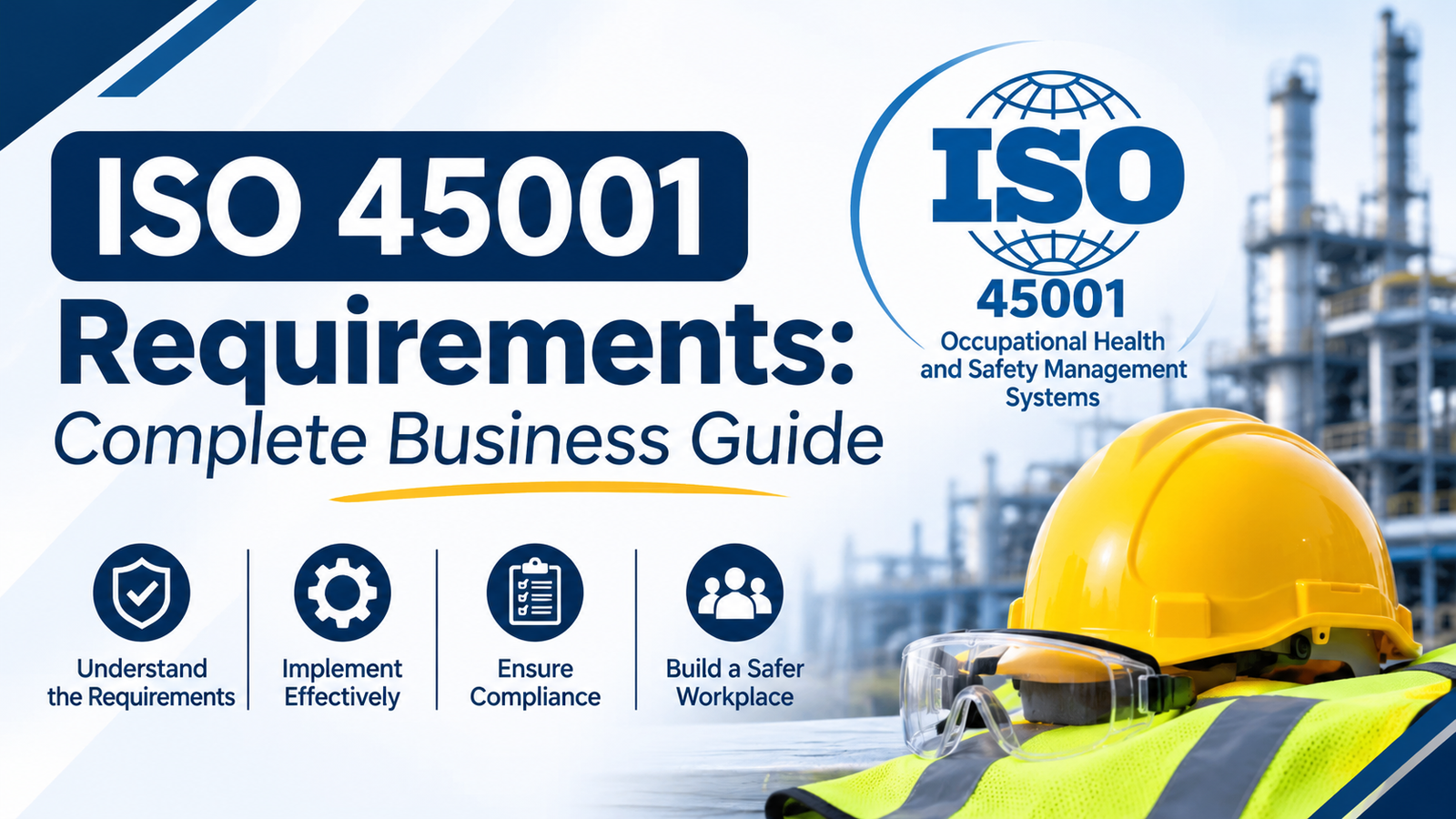
ISO 45001 provides an internationally recognised framework that helps organisations manage workplace health and safety risks. It gives businesses a structured way to identify hazards, prevent accidents, improve working conditions, and protect employees.
Understanding ISO 45001 requirements is important for companies that want to improve their safety systems and meet recognised occupational health and safety practices. In this guide, we will explain the main requirements, their benefits, and the steps businesses can follow to achieve ISO 45001 certification.
What Is ISO 45001?
ISO 45001 is an international standard for Occupational Health and Safety Management Systems (OHSMS). It was developed to help organisations create safer workplaces by identifying and controlling health and safety risks.
The ISO 45001 standard provides a framework that businesses can use to manage workplace hazards, follow applicable safety laws, train employees, and improve their overall safety performance.
It is suitable for organisations of all sizes and industries. Small businesses, large companies, construction firms, factories, and oil and gas organisations can all implement this standard according to their operations and workplace risks.
Unlike basic safety policies, ISO 45001 focuses on building a complete management system. It encourages businesses to take preventive action instead of waiting for accidents to happen.
Why Is ISO 45001 Important for Businesses?
Workplace accidents can result in employee injuries, legal problems, financial losses, and damage to a company’s reputation. A proper health and safety management system helps businesses reduce these risks and create a safer working environment.
Implementing ISO 45001 offers several benefits:
- Improved Workplace Safety: Helps organisations identify hazards and control risks before they cause accidents.
- Better Employee Protection: Encourages businesses to protect employees from workplace injuries and work-related illnesses.
- Legal Compliance: Helps companies identify and meet applicable occupational health and safety laws and regulations.
- Increased Productivity: Safer working conditions can reduce disruptions, employee absence, and workplace incidents.
- Stronger Business Reputation: Shows clients, customers, and business partners that the organisation takes workplace safety seriously.
- Better Risk Management: Provides a structured approach to identifying, assessing, and controlling workplace risks.
For businesses working in Pakistan, UAE, Saudi Arabia, Qatar, and other Gulf countries, an effective safety management system can also support client and project requirements.
Main ISO 45001 Requirements Explained
ISO 45001:2018 contains ten clauses, with Clauses 4 to 10 covering the main management system requirements. These requirements help organisations establish, implement, maintain, and continually improve their occupational health and safety management systems.
Here are the key requirements businesses need to understand.
1. Understanding the Organisation and Its Context
The first requirement is to understand the organisation and the factors that can affect workplace health and safety.
Businesses need to identify internal and external issues that may influence their safety performance. These may include the type of industry, working conditions, company structure, employee needs, legal requirements, and operational risks.
For example, a construction company may face risks related to working at heights, heavy machinery, electrical equipment, and falling objects. A manufacturing company may need to manage chemical exposure, machine safety, and noise levels.
Organisations must also identify interested parties, such as employees, contractors, customers, suppliers, and regulatory authorities, and understand their relevant health and safety needs.
2. Leadership and Worker Participation
Management plays an important role in implementing ISO 45001. Senior leaders must show commitment to workplace safety and make sure the organisation has the resources needed to maintain its safety management system.
Businesses must establish an occupational health and safety policy that explains their commitment to protecting workers and improving safety performance.
Responsibilities should be clearly assigned so employees understand their roles in maintaining workplace safety.
Worker participation is also an important requirement. Employees should have opportunities to report hazards, share safety concerns, participate in risk assessments, and suggest improvements.
When management and employees work together, it becomes easier to identify problems and prevent workplace accidents.
3. Planning and Risk Assessment
Planning is one of the most important parts of the ISO 45001 standard. Organisations must identify workplace hazards, assess associated risks, and decide how to control them.
Common workplace hazards include:
- Slippery floors and unsafe walking areas.
- Electrical equipment and exposed wires.
- Working at heights.
- Chemical exposure.
- Heavy machinery and moving equipment.
- Poor ventilation and excessive noise.
After identifying hazards, businesses should assess the level of risk and decide which control measures are needed.
They must also identify applicable legal and other requirements and establish measurable health and safety objectives.
For example, a manufacturing company may set an objective to reduce workplace accidents by improving machine safety and providing regular employee training.
4. Support, Training, and Awareness
Organisations must provide the resources needed to operate an effective occupational health and safety management system.
This includes trained employees, suitable equipment, proper communication, and relevant safety information.
Workers should receive training according to their job responsibilities and workplace risks. They must understand the hazards they may face and the safety procedures they need to follow.
Businesses should also maintain necessary documented information, such as training records, safety procedures, risk assessments, and inspection reports.
Proper communication ensures that employees, contractors, and other relevant people understand important workplace safety information.
5. Operational Control and Emergency Preparedness
Operational control means managing daily activities in a way that reduces workplace health and safety risks.
Businesses should establish clear procedures for high-risk activities and make sure employees follow them.
For example, construction companies should have proper fall protection systems, while factories should establish safe operating procedures for machinery.
ISO 45001 also requires organisations to prepare for possible emergencies. These may include fires, chemical spills, equipment failures, explosions, and medical emergencies.
Companies should develop emergency response plans, provide suitable equipment, train employees, and test their emergency arrangements where appropriate.
6. Performance Evaluation and Internal Audits
Organisations must regularly check whether their health and safety management system is working effectively.
Performance evaluation includes monitoring workplace conditions, reviewing safety records, measuring progress towards objectives, and checking compliance with applicable requirements.
Internal audits are also important because they help businesses identify weaknesses in their existing safety systems.
During an internal audit, auditors review procedures, documents, workplace practices, and records to determine whether the organisation meets ISO 45001 requirements.
The findings should be recorded, and any identified issues should be addressed through appropriate corrective actions.
7. Continual Improvement
ISO 45001 does not consider workplace safety a one-time activity. Businesses must continually improve their health and safety management systems.
Organisations should investigate incidents, identify their root causes, correct problems, and take steps to prevent similar incidents from happening again.
Management should also review audit findings, employee feedback, safety performance, and changing workplace conditions.
For example, if a company regularly experiences minor workplace injuries, it should investigate the reasons and introduce suitable control measures.
Continual improvement helps organisations maintain safer working conditions and improve their overall occupational health and safety performance.
Which Businesses Need ISO 45001?
ISO 45001 can be implemented by any organisation that wants to improve workplace health and safety, regardless of its size or industry.
However, it is particularly useful for businesses operating in high-risk industries, including:
- Construction and engineering companies.
- Oil and gas organisations.
- Manufacturing and industrial facilities.
- Transportation and logistics businesses.
- Mining and energy companies.
- Healthcare organisations.
- Warehousing and distribution centres.
Companies operating in Pakistan and Gulf countries can use this standard to improve workplace safety practices and demonstrate their commitment to employee protection.
Frequently Asked Questions (FAQs)
What are the main ISO 45001 requirements?
The main requirements include understanding the organisation, leadership commitment, worker participation, hazard identification, risk assessment, legal compliance, employee training, operational controls, emergency preparedness, internal audits, and continual improvement.
Is ISO 45001 certification mandatory?
ISO 45001 certification is generally voluntary. However, some clients, contractors, tenders, or business agreements may require organisations to have an appropriate certified occupational health and safety management system.
How long does it take to get ISO 45001 certification?
The time required depends on the organisation’s size, activities, existing safety system, and level of preparation. Smaller organisations with established safety procedures may complete the process faster than large organisations with complex operations.
What is the difference between ISO 45001 and OHSAS 18001?
ISO 45001 replaced OHSAS 18001 and introduced a stronger focus on organisational context, leadership, worker participation, and risk-based planning. It also follows a management system structure that supports integration with other ISO standards.
Who can conduct an ISO 45001 audit?
Internal audits can be conducted by competent internal auditors or qualified external professionals. Certification audits must be conducted by an independent certification body.
Improve Workplace Safety with Professional ISO 45001 Training
A safe workplace is not just a legal responsibility; it is an important part of running a successful business. Implementing ISO 45001 helps organisations identify risks, protect employees, improve safety procedures, and build a stronger safety culture.
Whether you operate a construction company, manufacturing facility, or industrial organisation, understanding the ISO 45001 standard can help you develop an effective occupational health and safety management system.
At Global Consulting International, we provide professional ISO training and qualification programmes to help individuals and organisations improve their knowledge of international management system standards.
Ready to strengthen your company’s workplace safety practices? Contact Global Consulting International today to explore our ISO 45001 Lead Auditor training and take the next step towards better safety management and professional excellence!